
Yuji Kanamaru
Yuji Kanamaru: prologue
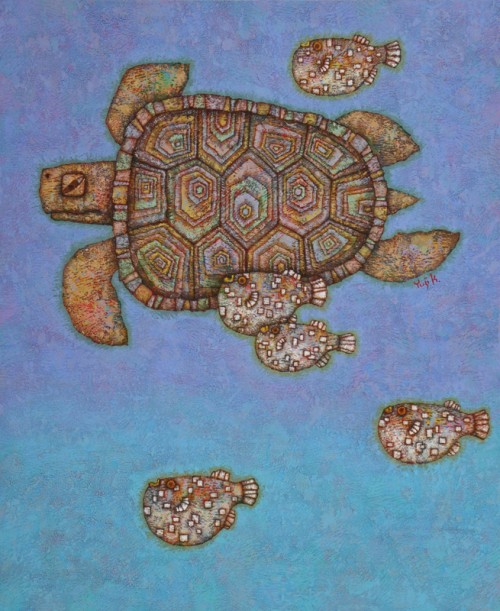
SHIKISAISHA will participate in Art Fair Tokyo 2016.
Returning to the fair after five years, we plan to focus once again on Yuji Kanamaru's three-dimensional works.
Ahead of the fair in May, we present a solo exhibition titled “Yuji Kanamaru: prologue.”
Explore Kanamaru's world, from the relatively small body of three-dimensional works he has gradually developed alongside his paintings since first presenting them at Art Fair Tokyo in 2011, to paintings inspired by animals and buildings.
Please note that the works in this exhibition are different from those to be presented at Art Fair Tokyo.
Yuji Kanamaru: prologue
February 22–March 4, 2016
12:00–19:00; closed Sunday
#2016 #金丸悠児YujiKanamaru
Yuji Kanamaru
Yuji Kanamaru
Born in Kanagawa in 1978.
Graduated from Tokyo University of the Arts.
Working from a foundation in Nihonga, he develops a distinctive painterly language
defined by unique textures and layered, vibrant yet subtle colors.
Incorporating elements such as fabric, fragments of newspapers, and intentional cracks,
his surfaces generate a singular material presence.
Influenced by his childhood spent in the Middle East,
his work evokes a world where a sense of the unfamiliar and nostalgia intersect.
