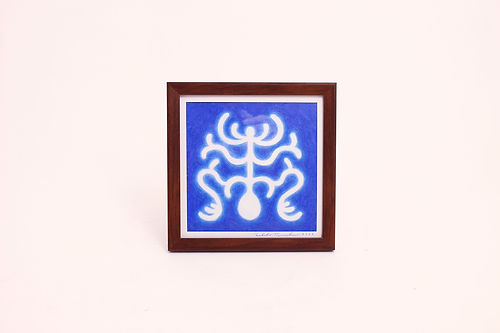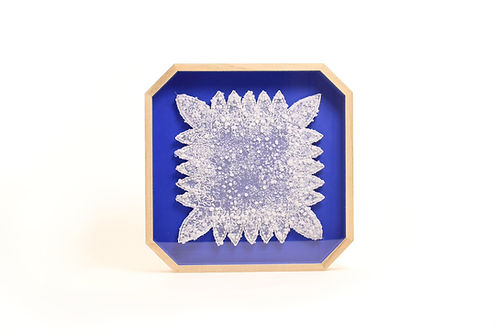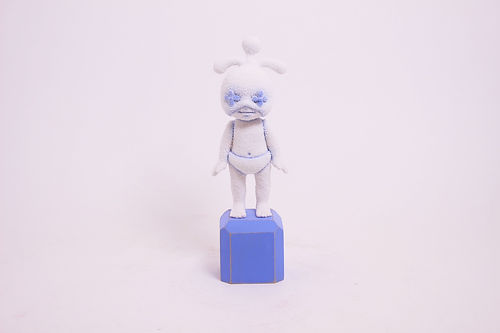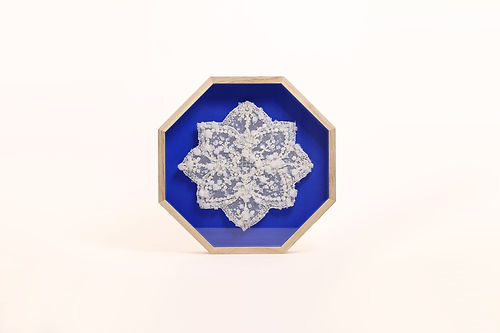
四季彩舎では、堀内マキコの個展「春トたまご」を開催いたします。
堀内マキコは、日本民俗学における「マレビト」の概念や、そこから派生する特撮、アニメなどのサブカルチャーに着目し、「異物との遭遇」をテーマに制作を続けています。多様化する現代社会において、他者や自身の内側に潜む「違和感」を、可愛らしさと不気味さが同居する独自の立体造形で表現してきました。
本展タイトル「春トたまご」には、舞い降りた奇跡を静かに温め、見つめ続けてきた時間が、春の訪れとともに新たな芽吹きへと変わる瞬間の感動が託されています。
これまでのメイン素材であるジェスモナイトに加え、本展ではレースや結晶といった新たな素材・表現にも挑戦しています。複雑に成長していく未来を予感させつつも、今この瞬間の清らかな芽吹きを捉えた新作群を、ぜひご高覧ください。
Artist Statement
私の表現するもの、それは「異物との遭遇」です。
「異物」とは何でしょうか。2010年以降、ネット社会がより身近になり、SNSの発達によって私たちは個々の日常や価値観を容易に発信・受信できるようになりました。それは社会の多様化を後押しする重要な基盤となりましたが、一方で「普通」という概念を希薄化させました。自身の存在や価値観の偏りに対して自覚的にならなければ、知らぬ間に他者を傷つけてしまうような、静かな緊張を孕む時代であるとも言えます。
子供が、自分とは異なる特徴を持つ生物や価値観に触れたとき、最初は「違和感」として拒絶したり、あるいは好奇心を持って観察したりしながら、経験と共にそれらを受け入れていくように、あらゆる「出会い」は本来「異物との遭遇」であるはずです。
「異物」を異物と感じることそのものが、自身の偏りや文化を再確認するきっかけであり、同時に自分自身もまた、誰かにとっての「異物」になり得ることを示しています。
「異物」は思っていたよりも近くに存在し、私たちの内側にさえ潜んでいるものです。異物同士として出会った私たちは、互いの固定観念を揺さぶり、日々新しく作り変えられていく。その生成の瞬間にある緊張や、そこから生まれる新しい関係性の可能性を忘れないために、私は形を作り続けています。
堀内マキコ
SHIKISAISHA is pleased to present “Spring and an Egg,” a solo exhibition by Makiko Horiuchi.
Horiuchi’s practice draws on the concept of marebito in Japanese folklore—visiting deities or outsiders—while also engaging with its contemporary extensions in subcultures such as tokusatsu and anime.
Centered on the theme of “encounters with the unfamiliar,” her work explores the subtle sense of dissonance that arises both within oneself and in relation to others in an increasingly complex society.
Through her distinctive sculptural forms—where cuteness and eeriness coexist—she gives shape to these ambiguous and often unspoken sensations.
The exhibition title, Spring and an Egg, reflects a quiet yet attentive gaze toward fragile, precious forms of life that nevertheless hold a resilient vitality. The works evoke a moment of anticipation: a miracle that has gently descended, carefully nurtured over time, now on the verge of emerging into new life with the arrival of spring.
In addition to her primary material, Jesmonite, Horiuchi introduces new materials and expressions in this exhibition, including lace and crystalline forms. Suggesting a future of complex growth while capturing the purity of the present moment, the new body of work invites viewers into a space of delicate transformation.
Artist Statement
What I seek to express is an “encounter with the unfamiliar.”
What, then, is the unfamiliar? Since the 2010s, as the internet and social media have become integral to our daily lives, we have gained the ability to easily share and receive individual experiences and values. While this has supported the diversification of society, it has also blurred the notion of what is considered “normal.” We now live in a time of quiet tension—one in which, without awareness of our own biases, we may unknowingly harm others.
When a child encounters beings or values different from their own, they may initially react with discomfort or curiosity. Through experience, however, they gradually come to accept these differences. In this sense, every encounter is, at its core, an encounter with the unfamiliar.
To perceive something as unfamiliar is to become aware of one’s own assumptions and cultural framework. At the same time, it reminds us that we ourselves may be unfamiliar to others.
The unfamiliar exists closer than we think—it may even reside within us. As we encounter one another as “others,” our fixed ideas are unsettled, and we are continuously reshaped. I continue to create forms in order to hold onto the tension of these moments of becoming, and the possibilities for new relationships that emerge from them.
Makiko Horiuchi
堀内マキコ Makiko Horiuchi
神奈川県出身、茨城県在住。主に立体作品を制作。
日本民俗学における「マレビト」の概念を手がかりに、特撮やアニメ、日本のサブカルチャーと接続しながら、現代における人間像やコミュニケーションの在り方を探る。
Born in Kanagawa, based in Ibaraki. Works primarily with sculpture.
Drawing on the concept of “marebito” in Japanese folklore, she explores contemporary human figures and modes of communication, connecting traditional beliefs with influences from tokusatsu, anime, and Japanese subculture.