
Yasuhisa Yamamoto
Boundary
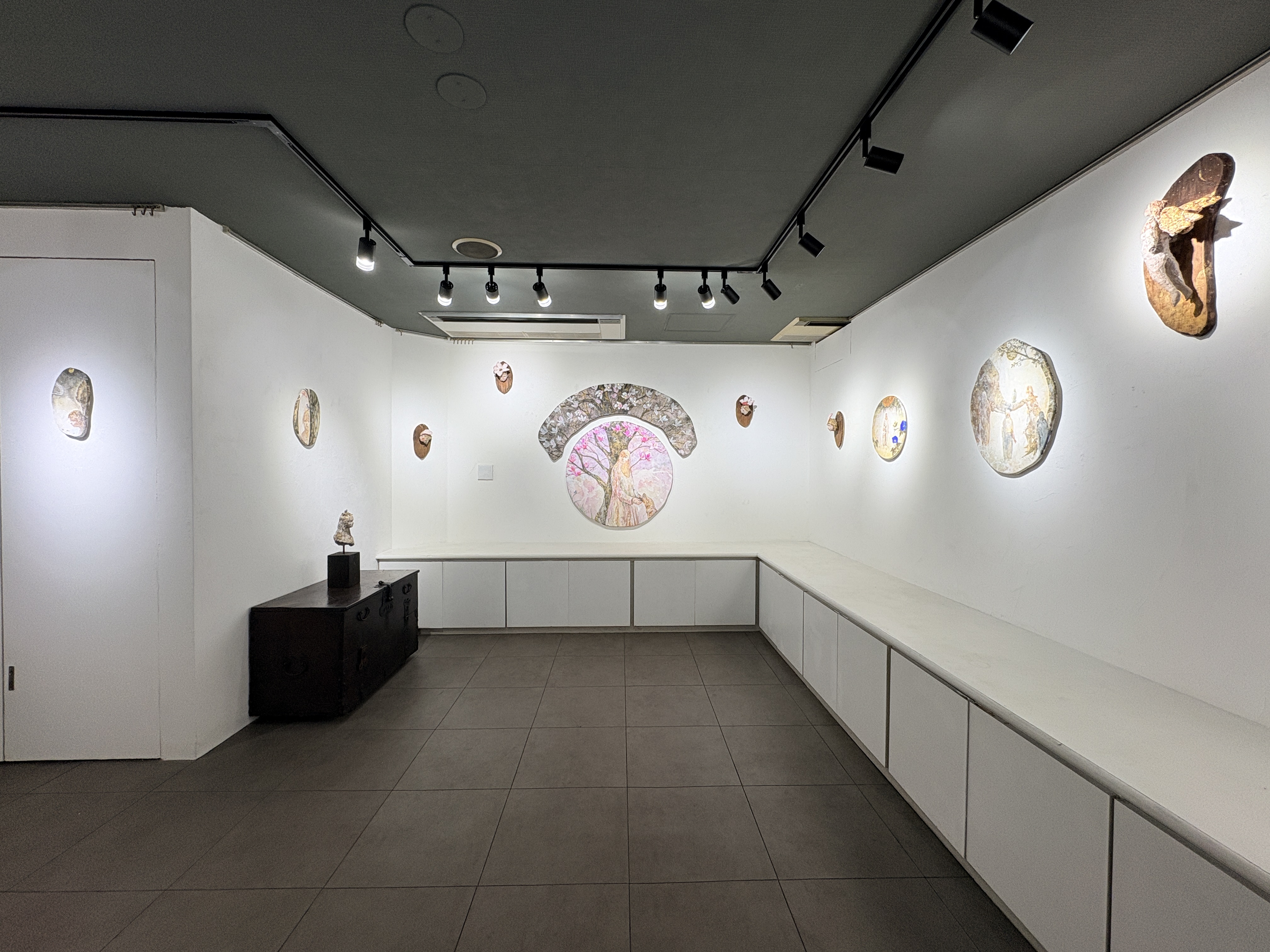
SHIKISAISHA is pleased to present “Boundary,” a solo exhibition by Yasuhisa Yamamoto, his first at the gallery in eight years.
In recent years, Yamamoto has continued to explore the theme of “abundance.” As a response to the material and informational “abundance” that overflows in contemporary society, he depicts motifs such as people, animals, flowers, mountains, and water in rounded, voluminous forms, evoking primordial landscapes where both spirit and body might once have been truly abundant.
Using water-based pigments such as casein tempera, acrylic, and ink on canvas, wood panel, and hemp paper, Yamamoto emphasizes improvisation and chance while pursuing a uniquely Japanese pictorial space. His works embody a tactile quality that allows viewers to experience a gentle and expansive flow of time.
The exhibition title, “Boundary,” arises from the artist’s question of whether art can bridge the rifts created by borders, religions, and differing values. Approximately fifteen works, including paintings, sculptures, and drawings, will be on view.
Through these works, we hope you will step away from the weight of daily realities and experience a moment of abundance and tranquility.
Artist Statement (Yasuhisa Yamamoto)
I have long continued to create works under the theme of “abundance.” Today, while material goods and information overflow, their excess often sweeps us along and casts shadows upon our hearts. In response, I strive to depict primordial landscapes in which both spirit and body might once have been abundant.
Motifs such as people, animals, flowers, mountains, and water appear as symbols of abundance. Their forms are full and rounded, embodying a sense of life’s fulfillment. In seeking a “Japanese pictorial space,” I emphasize flatness, improvisation, and chance, painting with casein tempera, acrylic, and ink on canvas, wood panel, and hemp paper. Through these materials and methods, I hope to evoke a tactile quality in which a leisurely flow of time arises between the viewer and the work.
In a world still marked by wars and conflicts, people’s hearts are torn by countless boundaries. The title of this exhibition, “Boundary,” carries my hope that art may offer a way to overcome such divisions and reconnect human hearts. In the moments spent before my works, I would be deeply gratified if you could feel a sense of peace and abundance.
Yasuhisa Yamamoto
Yasuhisa Yamamoto
Born in Kanagawa in 1963.
Completed his MFA at Musashino Art University, where he currently serves as a professor.
His work explores the theme of “abundance,”
examining the relationship between humans and nature.
Through motifs such as human figures, animals, flowers, mountains, and water,
he evokes a sense of primal fullness and harmony.
Using water-based media including casein tempera, acrylic, and ink,
his soft surfaces—marked by bleeds and textures—
gently engage the viewer’s sensory experience.

